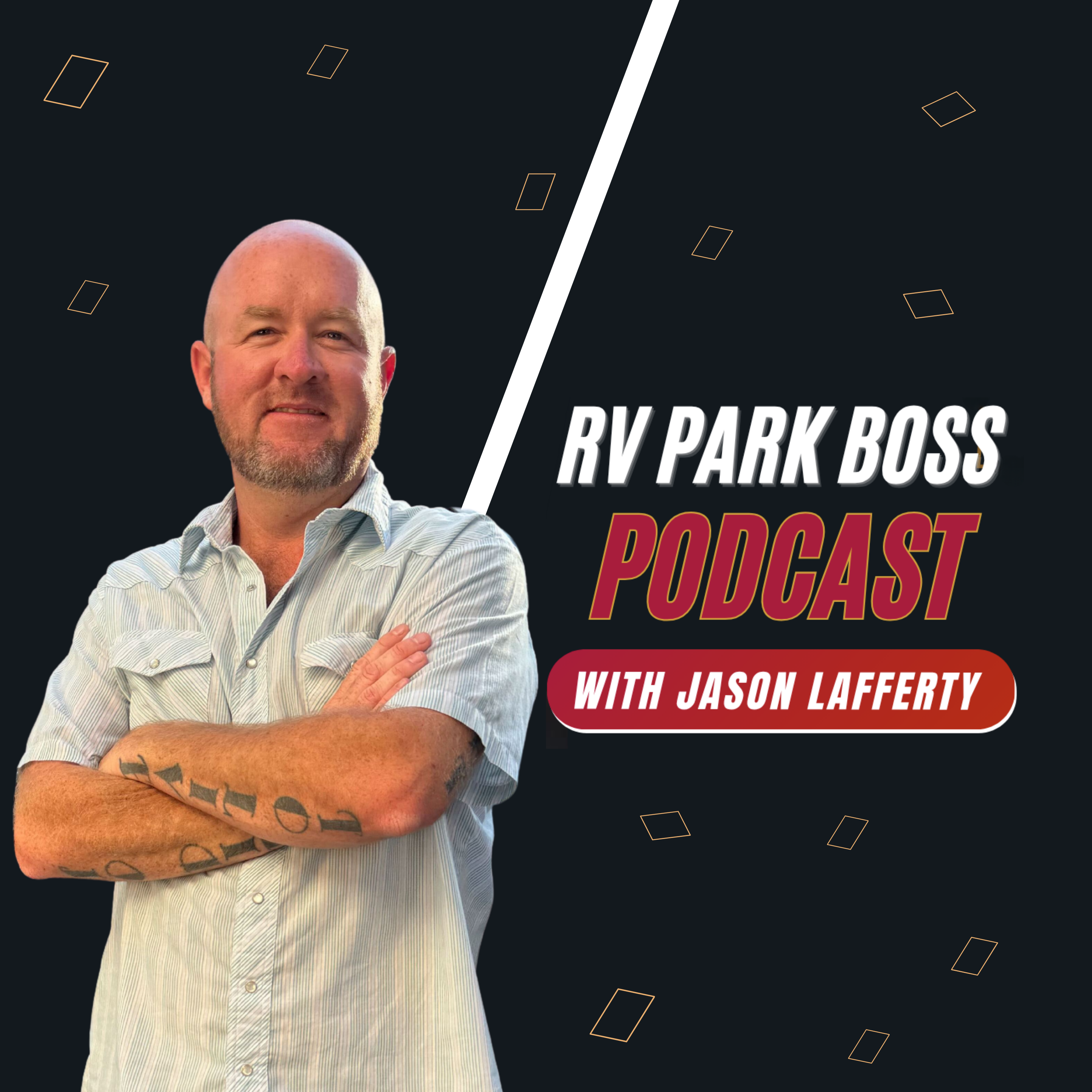
[00:00:00] Speaker A: Alrighty. Welcome to RV Park Boss, a podcast for RV park owners. I'm your host, Jason Lafferty. This is a show where we dive in deep on the rewards and challenges of park ownership and some funny stories along the way. This podcast is sponsored by RV Park Pros. 78% of all RV parks are self managed mom and pop operations. Aside from location, there's strong marketing, guest experience, proactive management which are keys to success and profitability for any park.
So if you're still trying to do this all yourself, there's a better way. RV Park Pros is a park property management system that will help you maximize your occupancy and profits while optimizing your guest experience and retention, all without you having to be involved in a day to day. So you'd like to learn more about that, you can reach
[email protected] again that's rvparkpros.com so today's RV park boss is Mr. Robert Preston.
He is owner of Unhitched RV Climb Capital, owns and operates 26 parks and is a marine pilot officer based out of Pensacola, Florida. How we doing, sir?
[00:01:03] Speaker B: Jason.
Thanks, Jason. I'm doing great. Thank you for having me on. Excited about today's show?
[00:01:08] Speaker A: Yeah, yeah. I appreciate your time on this. I like to kick it off with a little question.
So here we go. What's one thing that you learned about RV parks that you didn't know until you owned one?
[00:01:19] Speaker B: Man, that's probably a pretty long list, right?
[00:01:22] Speaker A: That's why I kick it off.
[00:01:24] Speaker B: Yeah, that's, that's a long list.
I, I, I would maybe take it to the next level. I think there's tons of stuff we learned as being a park owner.
[00:01:33] Speaker A: Yes.
[00:01:34] Speaker B: And then what I would say is that what I didn't know until you own multiple parks, I think that that big takeaway is when we went from like three or four parks to, you know, 10, 12, and then, you know, up to where we're at today, that's to me the, was the biggest learning curve and the biggest challenges. And so I would say the, you know, one thing that we learned in that process was that it's, it's be, the scale becomes much more difficult than just addition. There's a compounding complexity there that we certainly underestimated as we, as we grew past, you know, two or three parks.
[00:02:14] Speaker A: Yeah, yeah, I could, I could definitely understand that. I'm at the four park level right now, but you know, I'm trying to grow myself. But yeah, you could definitely see it because you want to, you want to create SOPs and, and similar processes for things, but they're parks, they're all different. You know, there's, there's blind sides, there's, you know, there's, there's all the things that you're like, oh crap, we gotta, we gotta get back to the drawing board, you know.
[00:02:37] Speaker B: For sure. Yep. So, yeah, I, it's been an amazing journey, but it's more complex than I thought.
[00:02:44] Speaker A: Yeah, yeah, yeah, for sure, for sure. I, I love, that's what I love about parks. Because the answer is always, it depends and there's always adjustments.
[00:02:53] Speaker B: Yeah.
[00:02:54] Speaker A: You know, like if it's a monthly park and, and your occupancy isn't there, can you add tiny homes? If it's a short term park, what are some other ancillary, you know, income generating things that you're not thinking about that can be a difference maker.
[00:03:05] Speaker B: Right.
[00:03:06] Speaker A: You know, like. Sure, you heard a story or have some that do pretty well with just automatic ice machines. You know, I know a couple parks are doing 40, 50 grand a year and just that.
[00:03:17] Speaker B: Right.
[00:03:18] Speaker A: It's like, all right, well, yeah, you're right.
[00:03:21] Speaker B: I mean it's, the beauty of this industry is that it's, there's so much creativity involved. There's so many opportunities to change revenue or decrease expenses and stuff.
And on paper, you know, I think that's, that's kind of the big learning point. Like on paper that makes perfect sense. Okay, we're going to buy a cabin. We can rent it for this rate and we can bring in a ton more revenue, which is true.
But then you think about the, you know, maybe the, the dark side of the story that maybe it doesn't make Instagram is if you add one cabin, awesome, you've now added housekeeping, you've now added maintenance, you've now added all these other things. The, in themselves are not a bad.
But if you had one or two cabins, that doesn't mean you get to have one or you know, one tenth of the cleaning crew, you still have to have a full housekeeping crew. And so that, that scale, part of it becomes where you have to think through. And so we, I tend to kind of segment our customers into really two types of customers in that regards on the expense side, you know, customers that are bringing their own stuff, their own unit and that's, that's an RV customer and that's like a tent camper. Yep. They're bringing their stuff. Right.
And we're, sir, we're giving them hospitality and we're giving them a place and then there's a deal. Half the customer is your glamping customer. They're not bringing their stuff. You're providing the house, you're providing the sheets, you're providing the stuff. And even though they're glamping in a tent versus tent camping, that's two completely different customers. Which has dramatic effects on your operating back of the house team staffing expense side of it.
[00:04:57] Speaker A: Oh yeah. Little. The little things, the towels, the linens, you know, where do you stock those? Where do you go when it's so.
[00:05:03] Speaker B: You know, where do you wash them? Who's going to wash them? When do you have them? Yeah, it's so small complexities of things on the surface. Like, oh, we'll just add a cabin. Well that has a. There's a long iceberg underneath that of, of what happens when you do that. So that's both. The awesome part about this industry is the, you know, creativity. You can have and create all kinds of new things and then the underbelly is the same thing. You can very, very quickly make a simple, very complex.
Which usually means an expense. There's an expense side to that.
[00:05:34] Speaker A: Yeah. Headaches, headaches, fire, some temporary fires, all kinds of stuff for sure. Yeah. Switching gears a little bit, you know, I'm more Texas based focused and we're seeing a 50% increase in listings this year.
So are, do you generally focus in the southeast or where's, where's your range?
[00:05:58] Speaker B: Yeah, yeah. So we live, I live in our office. Headquarters is in Pensacola, Florida.
So most people think that's, you know, the south Florida, but Pensacola is actually strange. Funny fact. Pensacola is, is as west in the US As Nashville and Chicago. We're in the central time zone, you know, which makes it, it's a really great launching point because most of our parks and most of our stuff.
Yeah. Or in the Southeast we have a lot up and down the I65 corridor. Birmingham, Nashville, Montgomery, Cincinnati and then we're now kind of Midwest in the Iowa area out to Louisiana. We don't have anything in Texas yet, but we're working. Working.
I think, you know, probably by the near. I'm guessing we will.
So yeah, most of our, most of our both are properties that we manage for other owners and the properties we own primarily fall in that southeast quadrant.
[00:06:53] Speaker A: Yeah. Okay. Yeah. So you just kind of find in your lane and moving geographically and kind of learning the area, seeing when you focus on area, you see the trends and waves if you will.
[00:07:06] Speaker B: Every area is a bit different Every season, you know, your topography and your weather become pretty big drivers of how a park runs, how it should run, who your customer is.
So, you know, it's not. You can't necessarily just go from Florida to Arizona and operate a park the same way. It just doesn't work, you know, both from. From who your customer is and what they want. And even from a systems infrastructure perspective, they're totally different.
[00:07:35] Speaker A: Right.
[00:07:36] Speaker B: So I think it's a little bit unwise to just hop around all over the country.
Not to say you can't, but it, it goes back to that complexity thing.
You can, but your, Your. Your business and your life becomes probably way more complex than is needed. Vice. Learning a region, establishing there, and then go to the next region. Right. So that's. That's kind of our philosophy.
[00:08:00] Speaker A: Yeah, yeah, that's very wise words there, sir. It makes, it makes a lot of sense.
My. My four parks are not that way. It takes 800 miles to do it.
[00:08:09] Speaker B: Oh, man.
[00:08:10] Speaker A: Around them, because it.
I was just going kind of guns blazing as I was going. Now I've been in IT for a few years, and I'm a little more wiser.
[00:08:19] Speaker B: Would you do that? Would you do the same thing again, you think, or would you try to stay a little more centralized?
[00:08:25] Speaker A: I would. I would try to stay a little more centralized because. Because for me, with parks, it's more. I don't care if. If it's a small one or a large one. It's more about whether I believe in it, whether it's a home run and if it's acquisition, whether it's, you know, something that I can, like, clearly identify, feel confident that I can turn it around, or bring a lot more value to it. It's really just like believing in a deal.
[00:08:46] Speaker B: Yeah, for sure.
[00:08:47] Speaker A: As if it. If it was farther away and I 100 believed in it. I don't care, you know, personally, you know, my truck would appreciate if it was closer, putting all the miles on it.
[00:09:00] Speaker B: But, yeah, get to be a road warrior. Yeah, yeah, we. We accomplished that. You know, some part of this, you know, we used to. We used to invest in other asset classes, and it just wasn't something we could do as a family. So this is part of why we're in this industry is there's a lot of travel involved as an owner or as a manager, but frankly, like, that becomes. We load up the RV and we go as much as we can as a family.
And so, you know, it's a. It's an adventure. It's a Family. It's a thing where I'm working there, there, working, still be together and still do that travel. So that's, that's one of the reasons we really love this industry and why we got into it.
[00:09:42] Speaker A: Yeah, that's huge. Because you're creating experiences with your family. Yeah. These kids are getting a little bit of education whether they know it or not, you know.
[00:09:49] Speaker B: Oh yeah, they know it.
[00:09:51] Speaker A: This is what daddy's doing, you know, and, and be able to spend that quality time too. That's pretty cool, man.
[00:09:56] Speaker B: Yeah. I've got a 10 year old, she's our, our oldest and I, I'm convinced she probably knows more about economics and business than most economic. Teach Chill. Yeah, she's the stuff she says. I'm like, well, yeah, that's, that's a really good point. Why didn't I think of that?
[00:10:12] Speaker A: Right? That's my daughter.
[00:10:14] Speaker B: That's right.
[00:10:14] Speaker A: That's really cool.
[00:10:16] Speaker B: That's, that's an awesome side effect of this is the, the spin off education that, you know, they get from seeing and these conversations even, you know, Daddy, did you have a new podcast? Yeah, so they'll, they'll listen to it. So they still think I'm cool at this point.
[00:10:31] Speaker A: Well, that's a w for sure. That's.
But there's, you know, a little bit of purpose, a little bit of passion behind anything in business, you know, that's, that's just a good recipe. It is awesome. Awesome. So is there in your realm, is there any forecasting that you're seeing with Parks, like I mentioned, Like, I'm. We're all seeing a bunch of new listings, more listing. It's like the gold rush was over and now there's. People are having a little I need to get out or something. They're trying to sell at the high of the market or something. But is there anything.
[00:11:01] Speaker B: Yeah, yeah, there is a lot of that. There's some, some, you know, real distress in the market. Right. Which means pricing is coming down on the sales stuff. There's real motivations from sellers.
I think as you would say, the, the golden age gold rush is over. Now it's the hard work, which in my opinion I'm pretty excited about. Like, I, I'm really excited about where the market's going. We're. Now's the time where like you said, you can find great acquisitions at the buy and that's, that's what makes a good investment. Like when you're buying something and it's a good investment at the purchase and you're built in equity there.
That's a way better starting point than having to figure out how to, you know, optimize cabins as an example to get it there. So, so from a market perspective, I think we're, we've turned the corner. I think we're heading into a buyer's market. So if you're a seller. I'm sorry, if you're a buyer. Right. I think that's, that's pretty interesting.
You know, we do expect the interest rates to start going down, so it'll be interesting to see how that balances because then it could very much become, you know, a seller's market again, depending on how. Yeah, that shift is a shift is there. It's, it's where at. The economy certainly plays a huge effect. You know, we're seeing reality, real tightening, real stress on a consumer too. It's not a lot extra money, which means you're not going to spend a lot of money on a toy. Just RVs are big toys, really big toys.
You may not travel as much or you may travel more because of an rv, because it's a cheap way to travel. So there's so many levers out there that right there, there's no one thing that's like going to change there because almost every lever you pull has a counter effect that sort of negates what it could be. So it's very interesting time.
I think it's a time where you have to be a really good operator. I think that's the one big takeaway, you know, like you're, you're, you're a good operator. You've got a management company.
We do as well.
From this point forward in the industry, you.
That's a requirement. You're going to have to be a good operator or have a good management company as an operator. The, the days of build it and they will come and just throw something out there, I think are gone.
[00:13:25] Speaker A: Yeah, yeah. I definitely, I definitely agree. I definitely see it, definitely feel it.
You know, I think like anything in business, I think it's just important to just what, what is anything and everything that you can do? Like, like, I'm meeting a guy next week in Central Texas, wants to build a park on his land, and he's like, what do I do? What do I do? And, and I'm like, well, a, you just, you know, start with what your end goal is in mind. B, what can you, can you do? But for RV parks, I like to say you just think about anything further that you can bring to the Table amenity wise. Customer serving, Customer facing wise. Just anything you can do. Because it's just weird. That brings people in, you know? Yeah, it's the dog.
[00:14:07] Speaker B: It's experiences.
[00:14:08] Speaker A: Yeah. It's. It's. How do you. You got a pretty good sized pond. How do you, like, put a little deck on it and make that where grandpa can throw a little fishing pole with his grandson. And they're going to take pictures, and it's going to be on your Google. My business, you know, like, so. So for parks, I just like. Like, that's what I love about him is, like, when I'm looking at a new park, I'm like, all right, so what are they doing? What are they not doing? What can they do? You know, like, what are those little things? You know, Like, I was looking at Beaumont. Beaumont, Texas, a lot, and, you know, oil and gas workers, you know, put your laundry In a bag, 20 bucks, we'll put it back on your step. You know, just little things like that.
So I don't know.
[00:14:46] Speaker B: Smart.
That's smart. Yeah. It's knowing your. Like you're saying you got to know your customer.
[00:14:51] Speaker A: Yeah.
[00:14:51] Speaker B: You know, got to know your customer. What do they want? What do they need? What do they want or what they need that they don't know. Right. That they're not telling you? Sometimes they don't know, actually.
And, you know, you can create. Yeah, it's.
You've nailed it. You know, it's. It's just every property is different.
We look at it.
Every property is different, but we still try to look at it from a standardized perspective, which means, you know, there's four big categories for us. The operations, the marketing, the finance, and then what we call facilities. Right? So that's the. The plant, the infrastructure. And like, you. Like you said, we would go through each one of those. What's going good, what's not going good, what needs to change for all those things. Four categories. And that helps us take something that's sometimes overwhelming with the possibilities and overwhelming with the variables and kind of get it back to a common language from part to part that gives us the ability to, you know, make those changes as needed.
[00:15:51] Speaker A: Yeah.
Yeah. Is there any little nuggets or little strategies that you like on the. On the operating side? Like, for example, I just found out on one of my parks talking to a neighbor last night, that they're putting in a big data center. So there's going to be a ton of construction, Construction workers is going to be. It's a. A big development nearby so how do I capitalize on that? You know, how do I. So I, I don't know how to get a hold of anybody there. So what I do know is that I can physically drive up there and go to that construction office and be like hey, do you guys have. Guys are working around town, they might stay in campers. Can I offer you a $50 referral bonus if you recommend us. Here's a flyer. Yeah, stuff like that is.
[00:16:32] Speaker B: Yeah, so I don't, it's certainly not a secret but HR departments are kind of that key. So finding the on site bring some donuts and stuff, great way to do it. But if you can go a little bit higher. Next level to the head which is the HR department.
HR departments and a lot of companies actually provide a lot of housing assistance to their team, to their employees. And so that that person and having you know, something, some type of flyer in hand or you know, preferred rate for ABCC company.com, you know.ink here it is. If any of your guys need a place to stay, we're offering this discount and giving that to the HR manager person is, is a really effective way that to, to build those, you know, business to business relationships you're talking about. Correspond's great but it's you know, if you can go to that next level and talk to the HR person. So that's, I guess that's my, it's not secret tactic but you know, tip of the day.
[00:17:30] Speaker A: Yeah, no, that's good. I'm definitely going to do that because. Because I don't know how to really get a hold of the HR department but I know I can physically talk to the person there and I can ask them, you know what I mean? So I'm going to do that.
[00:17:40] Speaker B: You know, any of the companies you just search, search, you know, search the their website, they're going to have a careers thing on there that's always going to go to the HR person. So you know, worst case scenario, you fill out an application like you're an employee. Like hey, actually I'm not an employee. I've got a park right down the street. I want to provide the service to you guys and to your employees, your employee and your team members. You know, can I come meet with you in, in the office or virtual etc. That's so that's how you find them.
[00:18:07] Speaker A: Yeah, I'm going to stick my virtual assistant on that this afternoon.
[00:18:11] Speaker B: There you go.
There you go.
[00:18:14] Speaker A: That's awesome man. So you got 20, got 26 parks. You guys sound like you got a pretty cool good team. What is, what is in your future? Just further growth, current optimization or kind of what is.
Yeah, the big.
[00:18:30] Speaker B: Yeah, all the above. You know, first have an absolutely amazing team and they are certainly the only way that this happens. Phenomenal leadership team, phenomenal regional managers. And then at the park level where we find great people and develop them to be the business leaders that they want to be at a park level.
And so we, you know, we treat each park like its own business. And so I think the structure is in place. So to answer your question, yeah, we're, we're at 26 now where I'm hoping and expecting and planning for essentially to double that by the end of next year. So you know, 50 plus parks underneath ownership or management.
And then in that process, you know, we're doing things like that gives us the ability to create, you know, a customer rewards system, loyalty programs, app apps for each property that also tie together to a master app. So you know, our guests can, can use that app to, to buy firewood at five different parks if they wanted to. Right. So yeah, so all that stuff's in the work. So there's certainly a growth aspect. There's an optimization aspect of it.
You know, for us, branding and marketing actually comes last. I don't know if that's smart or wrong, but we are much more of a systems based and fundamental economics based company. And then when it's working, we, we tend to bring a brand. So we are just now starting to like rebrand some of the parks and rebrands the parks to an unhitched brand. You know, they're, most of them have their own original name.
[00:20:08] Speaker A: Right.
[00:20:09] Speaker B: Even if we've owned them for five or six years, they're probably still underneath their own name. So. So that's part of the next phase too is, is being we think equipped, enabled to and ready to bring a brand to the market. Vice just a park.
[00:20:23] Speaker A: Yeah, I think, I think that's huge. One that I'm a big fan of Quality RV Resort and I'm only a fan because they got 12 of them and they're all branded solid looking. They, they, they knew what they were trying to accomplish and they're doing it. Yeah, they're similar type properties.
The result is they definitely feed off of each other. I would. Okay, you know, just look them up. Yeah, quality RV resorts there.
[00:20:47] Speaker B: Qrv.
[00:20:48] Speaker A: I don't know, I just, just kind of watch them take notes.
[00:20:52] Speaker B: Well, let's find them. We should get them on the podcast.
[00:20:55] Speaker A: Right, right. But definitely just the same strategy. You know, if you go to one like, hey, at your office when they're checking in, hey, we have these other parks too. You know, if you guys travel often, you know, and then it's just great because you're gonna, you're gonna. Yeah. Going to feed off of each other, I guess I should say.
[00:21:12] Speaker B: Yeah, absolutely. Yeah. You know, and that's. And the same for our team that when you have that brand or standardization as a team, that helps the team grow better too. There's less questions and there's resources and places for them to go figure out the questions they have. So yeah, the, the app, the app that we're building is really probably as much for the team as it is for the guests that all the back end behind the office stuff is right at their phone that we can communicate directly quickly and they can backwards as well. And all the resources they need to operate, you know, at that, that 100% efficiency mark is, is at their fingertips.
[00:21:52] Speaker A: Yeah, yeah. And then the. Also the result for that is having all that extra data to see what. Furthermore what, which is feedback from what the customer behavior is. And you know, like you can run better reports like, hey, this is working better. Let's focus more on this. Or like, hey, we, you know, you could, it will help you with your operations too.
Oh yeah, more, more details too.
[00:22:13] Speaker B: We all know data's key.
It's not.
It's a holy grail. I think that some people say it is, but it is certainly a foundation. The must have. You still have to have the service, you still have to have the hospitality, you know, but in this AI data world, it's a requirement.
It doesn't fix as many problems as I think people want it to fix, but it's certainly an amazing tool.
[00:22:38] Speaker A: Yeah, absolutely.
Absolutely. Well man, I appreciate your time.
Yeah. Enjoyed your knowledge here. What are some ways folks can reach out to you if they want to connect with you or share a park or something or just connect.
[00:22:52] Speaker B: Yeah. Yeah. Thanks again Jason for having me on. It's a privilege honor. Thanks for sharing some of the space and time.
You know the best way to find us from if you're a park owner or there is unhitched management.
So that's un unhitchedmgmt.com and our investment side of it is climcapital.com of course, you know, find me on LinkedIn and all the other normal stuff underneath Robert Preston.
But yeah, thanks. Thanks for letting me on. On Hitched RV Unhitched Management and climbcapital.com is our family of companies.
[00:23:29] Speaker A: Awesome.
All right, folks, whether you know how to reach this man, he's definitely knowledgeable in this industry. I'm a big fan of him. But if anybody here is listening that owns at least one park and wants to be a future episode RV park boss, you can apply directly at rvparkboss. Com. So that will do it for us. So see you next time. All righty, man.