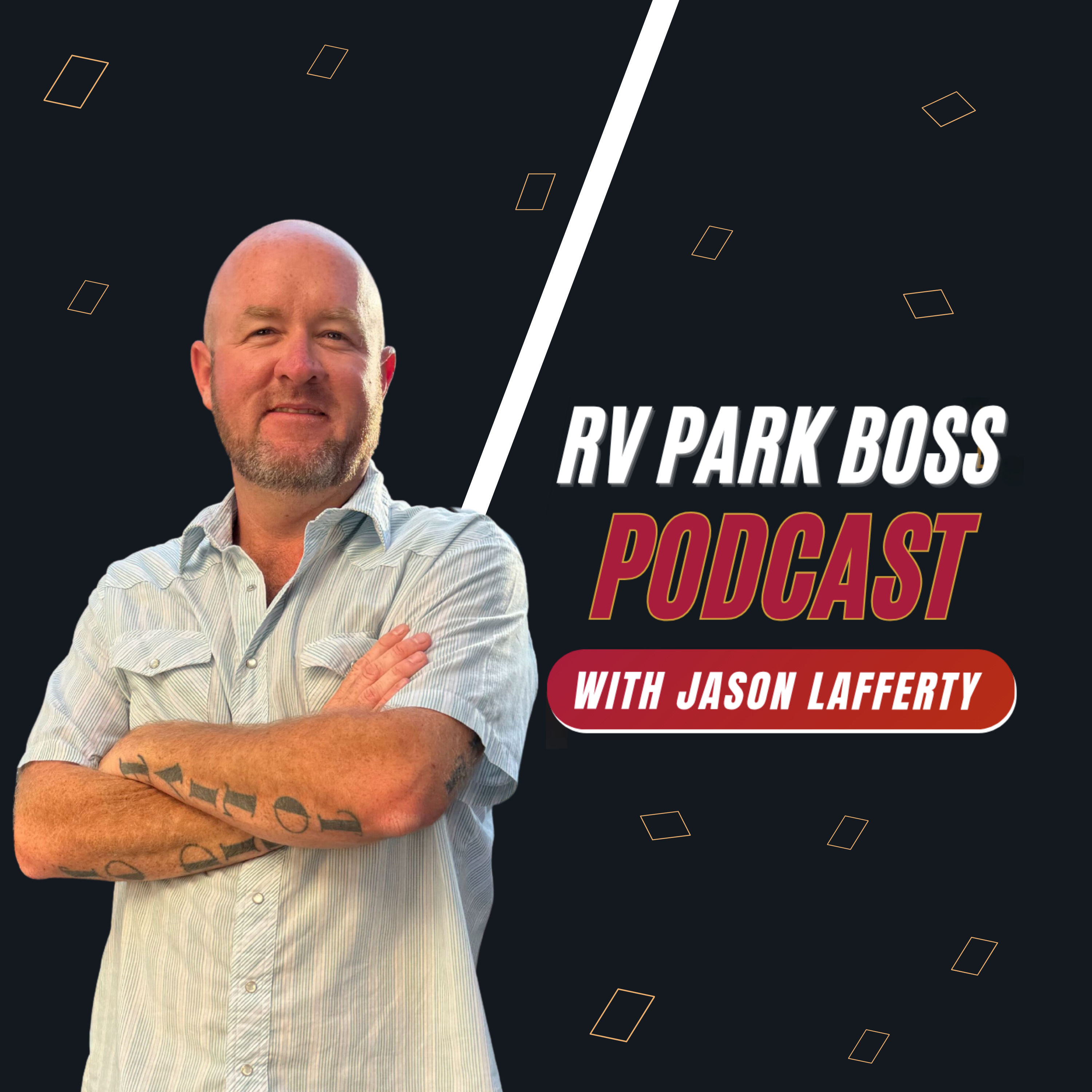
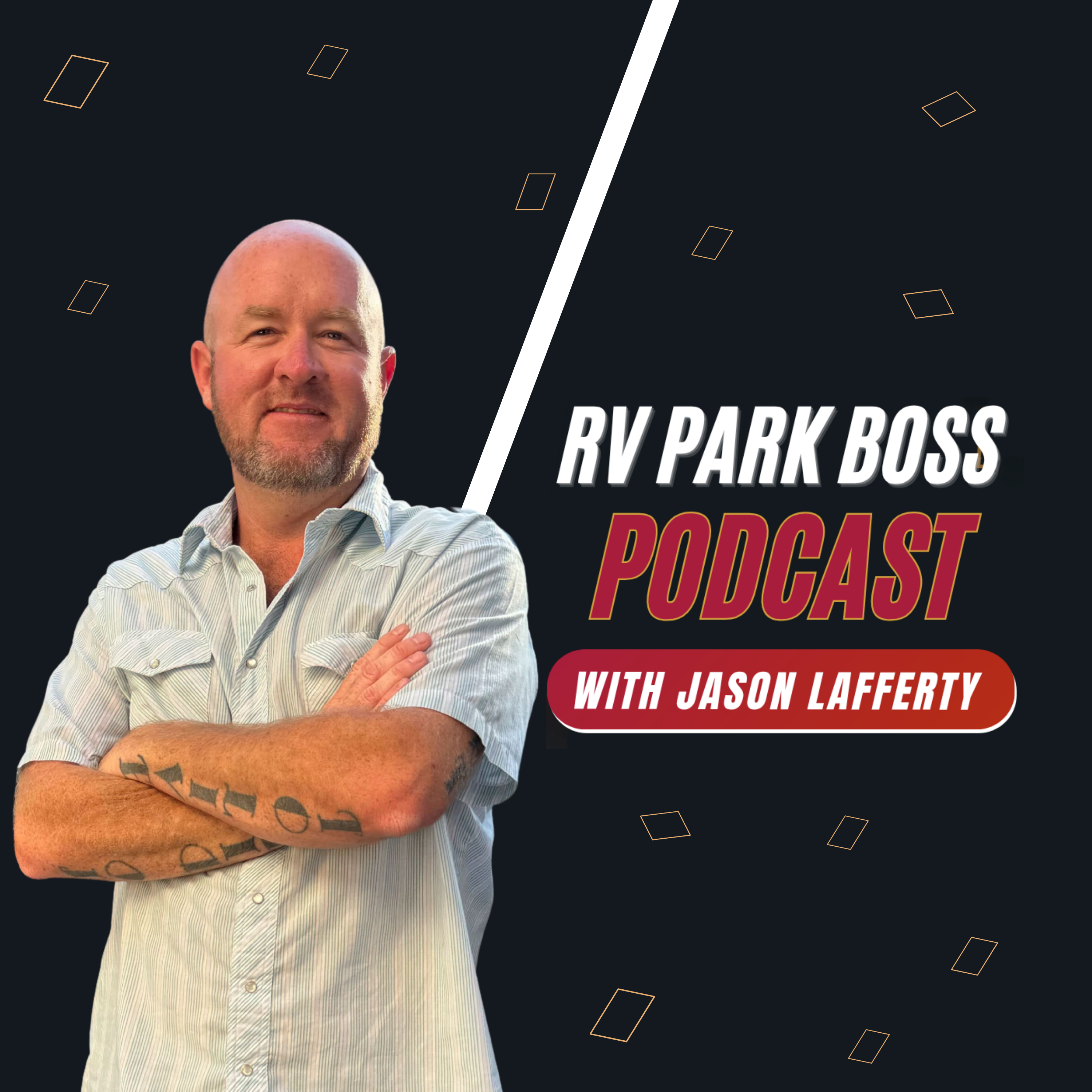
[00:00:00] Speaker A: Alrighty. Welcome to RV Park Boss, a podcast for RV park owners. I'm your host Jason Lafferty. This is a show where we dive deep into the challenges and rewards of park ownership and share some funny stories along the way. This podcast is sponsored by RV Park Pros. 78% of all RV parks are self managed mom and pop operations. And aside from location, there's strong marketing, guest experience and proactive management which are key success and profitability for any of those parks.
So if you're still trying to keep up with all that yourself, there's a better way. RV Park Pros is a park property management system. They'll help you maximize your profits in occupancy while optimizing your guest experience and retention. All without having to get you involved in the day to day. If you have any interest learning more about how we can streamline your park's operations, go to rvparkpros.com again that's rv parkpros.com so today the RV park boss is Kyle Klausener. He manages a dual career in software and real estate as well. He's holds 25 years experience working with software teams specializing in project management, cyber security and risk management. He also actively manages a real estate state portfolio specializing in RV parks. He founded RV Park Owner Mastermind to help campground operators excel by sharing experiences with one another. Kyle serves as a family, as a devoted hus husband and a father of three teenagers and a Christian. How we doing sir? Good morning.
[00:01:22] Speaker B: Welcome. Thanks for having me on today.
[00:01:24] Speaker A: Yes, sir. Yeah, happy to be here. I know we met on Facebook and I think it's good just to share stories with other park owners and see what other folks have to say and where their thoughts are and where they're at. And you know, I love this industry so I just kind of like, like see what everybody else has got going on.
[00:01:42] Speaker B: Me too. Me too.
[00:01:43] Speaker A: Nice. Well, I like to open it off with a little question and then we'll just of get on from there. What's one piece of advice that you'd share with a first time RV park buyer?
[00:01:55] Speaker B: I would say don't do it alone. That was one of the driving factors that I had when I was getting started.
It seemed like getting research for the industry was the few podcasts I could find. This is a great example of one of those that if it had been available back then I would have been relying on it. So there's a few of those. There's not many books, there's but, but there are options out there. So there's Trade shows, there's state associations. I'm in Texas. And so we have one that's creatively called taco, the Texas association of Campground Owners. But most states have their own. And, you know, joining ohi, I knew that there was so much I didn't know. And. And I could either learn from the school of hard knocks by making those mistakes, or I could try to learn from somebody else, which is what was prompted me to start up a mastermind. And the other half of it was my wife said, stop paying for coaches. So. So I created a group where I just went to. To one of the trade shows and introduced myself to as many people as I could and said, hey, would you like to keep in touch afterward? And so now we've got a group of park owners we meet once a month and we share what's going on, we ask questions, we give each other advice. And I mean, it's that. That I think singly does more for helping me get good, quality, vetted ideas from people that experience.
Right. I mean, you could ask apartment owners or, you know, other real estate investors. But. But this industry is. It's. It's a niche. It's a little bit different. It has its own characteristics, it's got its own laws. And so people that can help you, you know, learn and navigate some of that have been really helpful for me.
[00:03:39] Speaker A: Yeah, ever changing laws, you know, with the city, with the county, you know, they're. They're evolving quickly. With RV parks, did you see that they're trying to adopt the national fire code, 1194 in the whole state of Texas.
[00:03:51] Speaker B: You know that.
[00:03:53] Speaker A: I was gonna say if they approve that. I really like the book because it's 47 pages long. It's all pictures and facts. It's not like a bunch of fluff. And here's. Here's where your utilities go. Here's how a curve is supposed to be this radius. And it's just pretty straightforward.
It.
[00:04:07] Speaker B: I think it would help a lot of builders, anybody building or renovating, because now the standards are there, and they are, you know, at the mercy of whatever a county inspector or some other, you know, engineer comes up with. And it's going to be different from every city in every county. So, yeah, I'm in favor of that.
[00:04:24] Speaker A: Yeah. Yeah, I think it'll be good. I don't know if it initially passed or they're still working on it or what, but I don't know. I'm not sure. I just know it's been a lot of talk this year.
Have you have you. I haven't done this stinking Taco conference the last two years. I meant to, and that just didn't happen. Did you go to the one last year?
[00:04:41] Speaker B: This year I. I missed this year. I went to the national conference this year by. By Outdoor Hospitality Institute, so. But I missed the, The Taco Conference. But I've been to a couple previous ones.
[00:04:53] Speaker A: Okay. Yeah, I definitely wanted to go. It's always in April. And Conroe, it seems like we're doing the OHI one in Kentucky next month, so they said there'll be about a thousand to fifteen hundred park owners there. And so that should be good networking and talking.
[00:05:09] Speaker B: And they're pretty good at bringing in speakers as well. And, you know, it's a great place to shop for products from park property management systems. You know, there's, there's a lot on the market, and it seems like there's. There's probably going to be some consolidation in the market over the next few years. I mean, how many software. I don't know how many, you know, things there were before Airbnb and Verbo, but it's kind of down to 2 right now. And it, it seems like they'll probably be down to two or three, you know, leading contenders of this in, In a few years.
[00:05:39] Speaker A: Yeah, maybe some buyouts, acquisitions there, perhaps.
[00:05:42] Speaker B: Perhaps.
[00:05:43] Speaker A: Yeah. Yeah, that's the interesting thing because I've heard, like, Camp Spot was a. Was a bigger hospitality company, and then they threw all this money into their software and then they were making good money, and then they just took their attention to elsewhere. There, There seemed to be some bugs, but I don't know if that was just hearsay or what, but I don't know a lot about software, you know, a lot more than I would, but I just find it fun and interesting on, you know, creating the software. But then also, I think it's really important to keep up with it. Keep the bugs out and everything. Yeah, for sure.
So. So you got your park about two years ago. How did you come across it? Were you looking at listings? You just calling park owners, or did you build it or.
[00:06:20] Speaker B: You know, I tried. Well, I didn't try building, so I, I looked at it and said, you know, I can learn how to, to run a park or I can learn how to.
To build a park. And I, I thought just doing one of those two things would be, would be enough work for me. So, yeah, I was in the, I was in the market, shopping, calling people, sending out flyers.
It.
Ultimately, this one was, was a Listing, I think it was on the mls. Like it wasn't even listed necessarily where it was supposed to be listed. Yeah, like which, which helped, you know, it had been sitting there for a while and went down and met them and put under contract the day that, that I met them.
Yeah, I guess technically it wasn't under contract. It was more of a, of a handshake deal and we'll, you know, we'll agree in the contract, which isn't the safest way to do it, but hey, got it done.
We got it done.
[00:07:10] Speaker A: But sound like you made a decision to buy pretty quickly, so you must have got it and you said it was local to where you live and so must have checked all the boxes you were like for. So that's cool when you can find something like that.
[00:07:20] Speaker B: Yeah, I think having that idea of what your boxes are, you know, makes, Makes a big difference. That's one of the ideas that I, I picked up listening to a lot of other people is what's your buy box? For me, I needed it since I, since I am working full time, I needed it close enough that I could get there in a day, do whatever work needed to be done and make it back home. And so I had about a two hour radius of where I live was one of the determining factors. Fortunately, there's a lot of growth in this area and I had a few other factors as well.
Size.
For me, I like, I like pretty parks.
[00:07:59] Speaker A: Yeah.
[00:07:59] Speaker B: I, I don't, I don't want something that looks like a Walmart parking lot.
And, and yet, and yet I get reviews from people who say there's too many trees. I'm going, gosh, I love the trees. But.
[00:08:09] Speaker A: Right?
Yeah, I would, I would say 90 of of RVers love the trees. I mean, I mean, who does?
[00:08:16] Speaker B: But evidently, evidently some one star reviewers don't.
[00:08:19] Speaker A: Yeah. Yeah. That's crazy because, because I'm developing a park as a contractor right now and, and the owner, you, you, if you're developing, you could do a tree survey and then like engineer your plans around it to save as many trees as possible. The owner didn't want to do that and they were just like, just do what you can do. So I was like, all right, I'll get a measuring wheel and some tape and I'll figure it out. But, but it's, it's huge. Hugely different. Like where I'm at Now, these are 60 foot mature oak trees.
You know, one tree could shade two RVs. I mean they're huge and they're beautiful.
[00:08:50] Speaker B: They look beautiful.
[00:08:51] Speaker A: Yeah, yeah. Because, because I mean, what's your alternative? Is you spend 750 bucks per small little baby 15 foot tree and then in 10 years they grow a little bit and provide a little bit of shade, you know, like.
[00:09:04] Speaker B: Yeah, then you gotta water them and you know, they.
[00:09:07] Speaker A: I don't know.
[00:09:08] Speaker B: That's not my style. So you know, I think, you know, you're asking about that, that plan. I'm curious what, what your plans are when you're, when you're building it. Like walk, walk through maybe your kind of your 10 points. Like what do you, what do you lay out from starting that build process to, to we're up and running and, and hopefully making some money.
[00:09:27] Speaker A: Yeah, yeah. I mean first it's you know, really analyzing the land. You know, you got your canvas, so what can you do with it? You know, like this one I mentioned to you just a minute ago is an Anderson.
It's 30 acres and he doesn't need to use all of it, but there's a nice little stretch of trees. So I just honed in on that. How do we save that and have back as the way it was shaped is get as many back end sites to where you can have like 75% of tree coverage. And I think that would be awesome. So, so figuring out what you can do and then you, you know, dig into the feasibility side of, of utilities. If you don't have water, you could take 12 to 18 months to get a commercial permit for, for through TCEQ. So that's huge. And then you just check in with your power company and then get your septic site evaluator kind of say, you know, here's our preliminary plan. And then they might have some recommendations depending on usually you can have a pretty basic or simple septic system if you don't have city sewer. But you know, sometimes if you're trying to do it in phases or something creative they might need once and you might need some input on how, that, how to lay it out.
So you just, just start going, going down from there and always try to see what, what amenities can you possibly come up with that's in the budget to, to bring people in. Because I've talked to a lot of people and they're like, well, can we just like no, you cannot just. You need to give somebody every single reason to come to your park and then some. Because if you build it and it doesn't fill up, then what the hell are you doing? You're going to be kicking yourself in your butt and Then you're going to wish you would have done that anyway. So just do that up front. So, so just keep digging and unpacking, digging and unpacking. You know, is it a monthly park, is it short term park or is it an in transit type of park and, and to kind of build off the, that experience from there. And the other key thing I would lastly say on that is just have an idea of who that exact avatar is of, of your clientele base. If it's a monthly person because there's a solar farm or construction projects in the, in the area or if there's some big permanent plants and a lot of those people typically stay in, in, in parks and figuring out exactly who they is and when you know exactly who they are that's going to stay in your park, then you can build, build something for that, that person specifically.
[00:11:33] Speaker B: And that's, that's an area where I didn't re. I, I thought we would be much more of the, of the transitory, the, the touristy type of a visitor. But turns out when you're in a rural enough area, far enough maybe from, from too many tourist draws, that's not who comes. Right. And so, so we're actually much more of a, of a monthly than I anticipated initially. And they want slightly different things. Right. So if you're building from scratch and you knew that a guy who's going to stay there for, for four months or six months, he doesn't need a pull through, he's not leaving tomorrow, he probably does value the shade a whole lot more because he's going to be out there grilling a few nights a week. Right. So, so he's, he's looking for slightly different stuff.
[00:12:09] Speaker A: Yeah.
[00:12:10] Speaker B: I think, I think on our plan since, since we inherited a property that was in a condition it was in doing a few capital improvements, you know, not, it's not lipstick on the pig. I think it was more than that, but it was the idea of look that the skeleton is here.
What are we going to prioritize spending a limited budget on first in order to, to try to make, make it clear that we're investing in this.
For us, adding a, adding an automated gate was a huge one because the people who are living there wanted to feel safe. And so once you have two or three people say, you know, this would be nice, like all right, great, then that's a no brainer and we got a ton of people commenting on how they liked that and then it helped other people choose to move in.
I was shocked how Much.
Just adding a fence out front did not because it really changed anything, but because 700ft of fence, we've got a lot of frontage on a FM road is visible. Cars see that going up and they're like, oh, there's something here. I don't know. They drive past our sign and not notice it. But they see this long fence that's new and painted and folks literally have stopped in and said, oh, it looks like you're doing stuff. So we're checking it out and a few of those people have converted to staying with.
[00:13:26] Speaker A: So. Yeah, it's crazy.
[00:13:28] Speaker B: What I. Go ahead.
[00:13:30] Speaker A: Yeah, it's crazy. There's the randomest things like that. Yeah.
[00:13:33] Speaker B: It's not always what I think it's going to be.
[00:13:35] Speaker A: Yeah. Who'd have thought some frontage, you know, privacy fence or whatever fence you put up and then that threw some people in. I mean, that's crazy.
[00:13:42] Speaker B: I mean, I guess that's the, the curb appeal. You know, if it was a house, it was, you know, replacing your broken shutters. Like so, like this was, this was the curb appeal that, that helped attract some guests.
[00:13:52] Speaker A: Yeah. That's cool. That's cool. So did you, did you have to like re. Gravel any of the roads or just. You just did the gate, the fence and then you do anything else?
[00:14:00] Speaker B: I've, I've learned how to drive a tractor, pull a box blade, level out some things, smooth some sights out. We've brought in, we have brought in some gravel to it. They're still sturdy, but. But they're so much more attractive and people like them more when you can see that the spot delineated grass and dirt and erosion just really work against that. So, so we brought some gravel. We have a lot of concrete spots those need less work.
Tons of tree trimming because we have a lot of trees, you know, and then, and then I think the last year we've really been looking at, continue to look at what are some of those capital improvements that we can make that we think are going to bring a return from small ones. We've, we've experimented with, with buying travel trailer and selling it like as a rent to own thing. So you're, you're renting the spot and you're doing rent to own on. On this trailer. We're, we're putting in a few covered RV spaces. We get requests for those like, well, if people are calling me and asking about it, then, then I'm sure I can, I can charge a little bit more and rent this.
[00:15:07] Speaker A: Yeah, absolutely. Yeah. Those indicators are key and that, that rent to own. I'm, I'm, I'm starting to do that myself. I bought one last week for 8, 500 bucks and then I already had it owner finance pretty much for 11, 500 as soon as I dropped it off at the park. Because there's, there's, you know, there's a clientele base that will bring their own campers, but there might be somebody that needs to upgrade it, but they don't have the means to, to do so credit wise or something. But I think there's just, I think there's a need for somebody that would be like, if somebody would take a chance on me to owner finance it, I would be happy to pay a little bit more and then I have that sense of ownership for an upgraded trailer. Right. Because that's their home. So. Right.
[00:15:48] Speaker B: So the cost, I think that's a win, win, win. Like you've got, you've got a tenant who's invested in, in staying at your property.
You've got somebody who wants to care for this because this is their, you know, they view it as their equipment. Right.
[00:16:00] Speaker A: On a rental that they're going to dump in 12 months.
[00:16:03] Speaker B: Right, right.
[00:16:05] Speaker A: Yeah. Yeah.
[00:16:06] Speaker B: Our big debate right now is whether to put in a pool. We're in, we're in Texas. It's, it's plenty hot. We've gotten requests for it. We've had people who have, you know, moved to other parks because they're like, I like to hang out with my buddy and they've got a pool at their park. And yeah, you know, it's, but you know, it's a big investment, so. But I think we, we need to do that in the next year.
[00:16:25] Speaker A: Yeah, an in ground pool, I mean you could drop $50,000 for a little baby.
I, I've seen some that were above ground but tastefully done with like a $10,000 deck too. So maybe 15,000 do investment. But, but yeah, I don't know. There's, there's a little bit more insurance, but if, if it increases your park overall wise and folks are happy and you're proud of it, then, you know. Right.
[00:16:49] Speaker B: And now that I've learned how much literally drive by matters to some degree, if we can put it in a spot where you see it as you're, as you're driving by, I don't see a lot of pools on this road. Right. So that's, that's an attractive thing. So we might, we might go that route.
[00:17:03] Speaker A: Sure, sure. That's cool. Well, Keep me posted if you do more on the owner finance route because that's what I'm definitely harping in on because, because I got four parks and, and I, I think that that would kind of be my, my little help to boost occupancy to each. Each one of them just got to figure out the capital side of it, so. But I know a few people that are doing it not, not a ton on a larger scale. But I don't know, it's just a hot.
[00:17:28] Speaker B: Kind of messy to scale. Right. I think it's a small scale thing if you were, if you're, you know, big koa or jelly stone like that.
[00:17:35] Speaker A: Right.
[00:17:35] Speaker B: That's my guess.
[00:17:37] Speaker A: Yeah, sure. But I like it. I'm definitely going to dig more into that, so.
Well, awesome, man. Well, I think this is a good point to, to wrap things up.
If folks want to reach out to you, do you have a. Any way to.
They can do so?
[00:17:53] Speaker B: Sure. I, I'd say maybe two things. Drop my email here. You can reach me at Kyle Clausner gmail.com. so that's k y l e dot c l o s N-E-R gmail.com or just do a quick Google search for the RV park owner mastermind. We're always looking for current, current park owners who want to excel. Right. So it's, it's not necessary for somebody who's, who's thinking about getting into the industry, but, but somebody who's there and wants to learn and network with other owners. That's. That's who we work with.
[00:18:24] Speaker A: I like that. Awesome. All right, folks. Well, I appreciate your time again, Kyle and the five or 10 people that's listening to this. If you own at least one RV park, you want to be on a Future episode of RV Park Boss, you can apply
[email protected] so that will do it today. Thank you.
[00:18:40] Speaker B: Thanks, Jason.
[00:18:41] Speaker A: Sir.