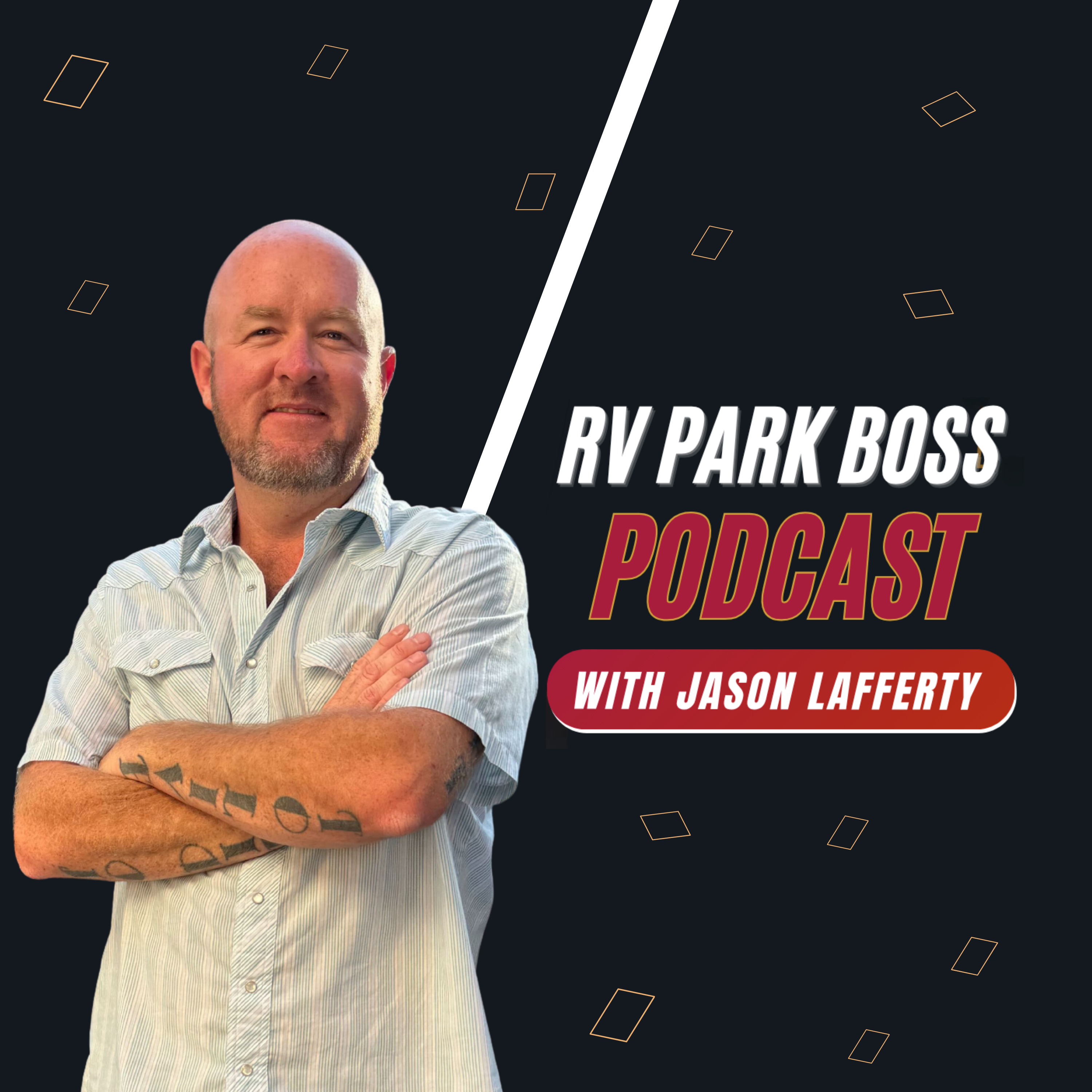
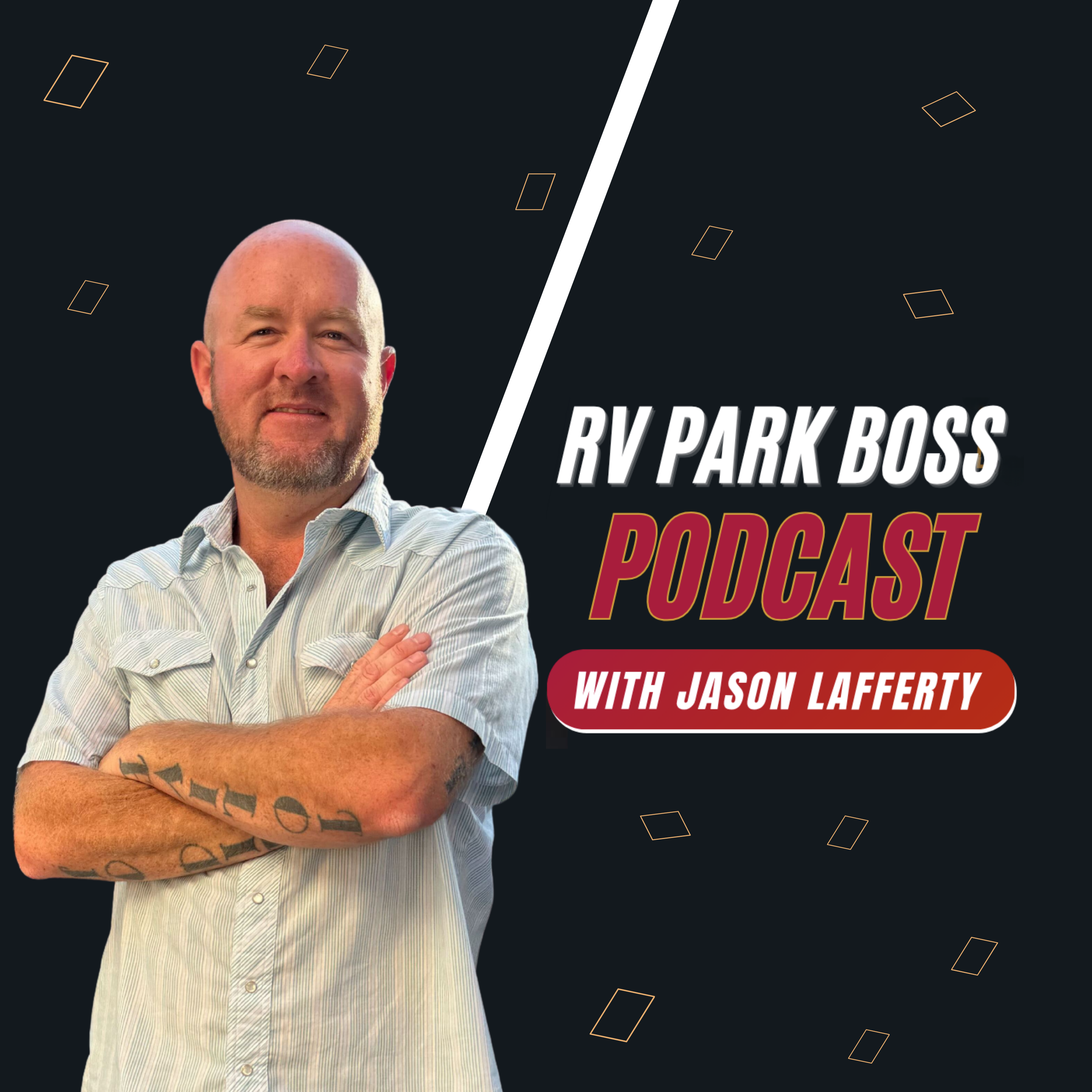
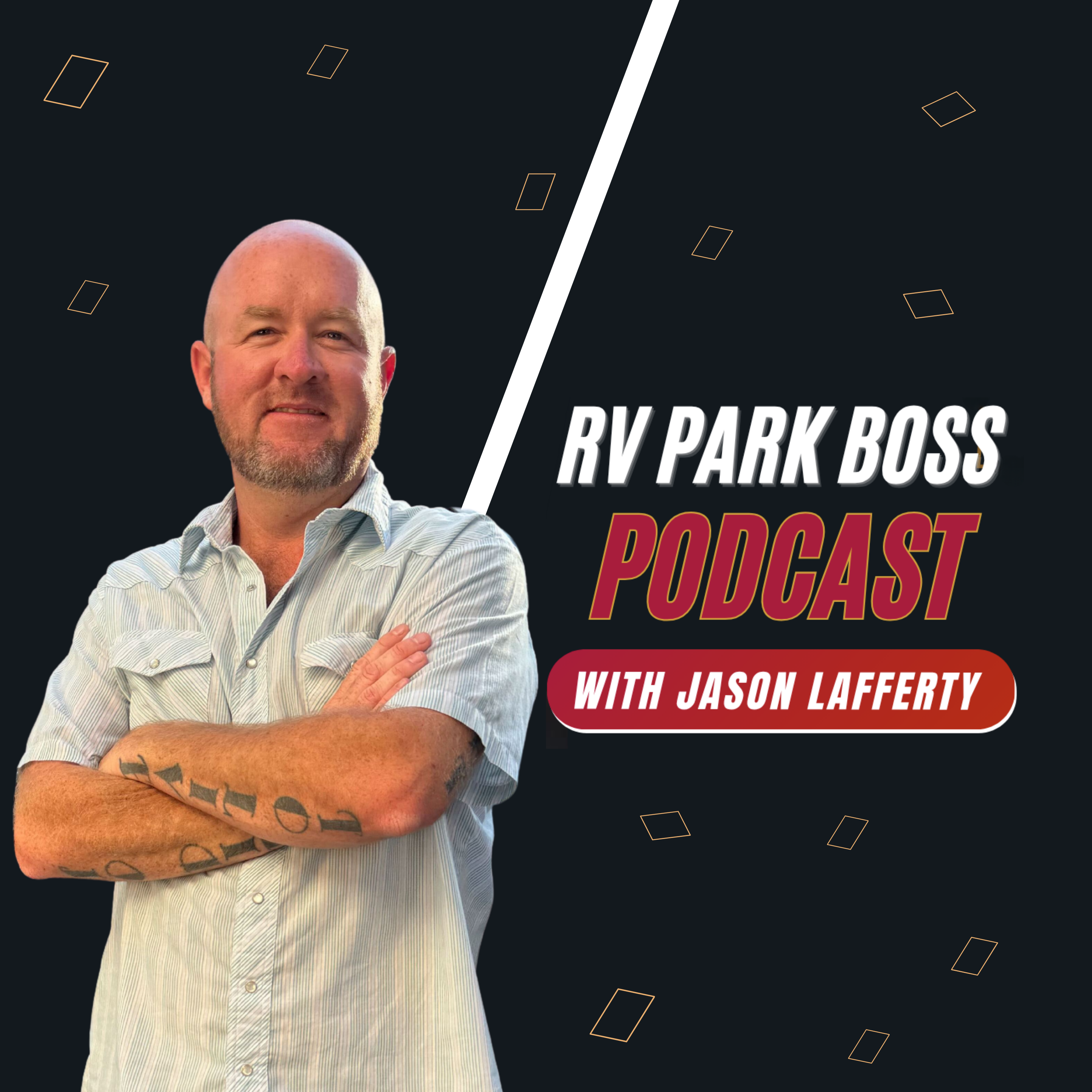
[00:00:00] Speaker A: All righty. Welcome to RV Park Boss, a podcast for RV park owner owners. My name is Jason Lafferty, your host and this is the show where we dive deep in the challenges, rewards and park ownership and share some funny stories along the way. This podcast is sponsored by RV Park Pros. 78% of parks are self managed mom and pop operations. And aside from location, having a strong marketing, guest experience, proactive management are the keys to success and profitability for any park. So if you're trying to do all that yourself, there is a better way. RV Park Pros is a park property management system that will help you maximize your occupancy and profits while optimizing your guest experience and retention, all without having to have you involved in a day to day. So to learn more about that, we can streamline your park operations, go to RV park pros.com Again, that's RV park pros.com so here today, the RV park boss is Mr. Mr. Landon Dorey. He's the founder and CEO of Northstar Brokerage and Advisory, a boutique firm specializing in helping people buy and sell RV parks, mobile home parks, campgrounds and marinas as well. He also has a rich history in conducting 1031 exchanges to help sellers offset sales tax, establish long term cash flow for when they sell. Welcome to the show.
[00:01:18] Speaker B: Thank you, man. Happy to be here.
[00:01:20] Speaker A: Yeah. Awesome. So probably we've known each other, what, for a couple years now?
I think it's two years since you first talked.
[00:01:27] Speaker B: Yeah, yeah, we worked, I guess worked and are still working a couple deals together across Texas and Oklahoma.
How did we first get in touch actually? Was it through the Facebook groups or something different?
[00:01:41] Speaker A: I want to say the Facebook groups. And then you were involved in Whitney Ridge and. And then I was going to catch up with you in that event or something like that. Then I mentioned, yeah, states, but yeah, let's go, man. I want to kick things off with the little loaded question for you. And so here it is. So you, you know, you've been in the trenches helping people, buying and selling parks for a while. What is the biggest shift you've seen in the RV park market over the past few years and how is that shaping the deals that you're seeing today?
[00:02:10] Speaker B: Yeah, good question, man.
That could be the subject of the entire podcast and it might be. There's so much going on right now in this space.
There is, yes, a lot of hyper.
[00:02:23] Speaker A: Local regions and you know, they're a lot different. So.
[00:02:28] Speaker B: Yeah, yeah, I mean, there's some macroeconomic factors that are. That are impacting business, impacting operations. There's of course heavy concentration to the like actual little micro economic factors, communities, different parts of the state, different parks that cater to different types of renters. I mean with as big as Texas is specifically and as many different types of geography and types of industries as Texas has and supports, like I would argue they probably have the most diversity in types of RV parks just right off the bat. So that creates a lot of dynamism right from the get go.
But man, the last five years, really, really Covid was the big thing that augmented this.
The interest and demand and investment and development in RV parks has been insane.
People are hot to trot for these as investment properties. And there's been a lot built, there's been a lot purchased.
A lot of new types of buyers are entering into the space, which is probably my answer. There's a lot of new, new eyes, new capital, new expertise that's coming into the space. It's very different than what you said when you're, when you started this podcast, which is that 78% is mom and pop, which is a true figure. I tell people 75%. But you're, you probably got the more accurate data on it. But yeah, three out of every four parks are owned by someone who has one, maybe two or three parks in total. They're not professional managers, they're not necessarily super sophisticated groups. And the biggest shift that we're seeing is the same shift that we've seen in different asset classes before.
It's the professionalization and in some cases institutionalization of the space. So a lot of really smart people are coming into the space and it's not, you know, it's not Bob and Betty who have been owning their park for 20 years anymore now it's this like crew of MBAs that has, they're backed by a hundred million dollar, you know, family office or fund out of wherever. New York, California, Arizona, Georgia, we've seen it all. And they're looking to deploy hundreds of millions of dollars into real estate and a lot of what park specifically, but a lot of which is specifically in Texas. We've got one of the highest concentrations of parks. We're one of the most business friendly and investment friendly and landlord friendly states that there is. So if you are a Texan, you obviously want to invest in your backyard, you're very bullish on the state. If you're an out of state investor and you're thinking about investing capital and crossing state lines, then Texas is, it's definitely on your top Five list if it's not in that top three.
[00:05:01] Speaker A: Yeah, yeah. Those are all a lot of great points.
I think when you see a lot of, you know, private equity and bigger, more professional groups. I think one underlining stuff for, you know, guys like me is understand those guys sometimes overlook and make a lot of assumptions.
[00:05:30] Speaker B: Jason, I don't know if you can hear me, but you froze on my end processes.
[00:05:33] Speaker A: But I think it's really important with parks on how much of like a little pulse that they have in their little. Each little community, how different they are.
[00:05:42] Speaker B: Yeah, that, that it could be more accurate. I mean there are parks that cater to obviously we've got the short term and long term renters. We have more of a low income housing. We have more workforce horse housing. We've got water adjacent that kind of brings in the seasonal folks. We've got the southern and coastal markets which are heavily concentrated on snowbirds. I was out at a park just yesterday meeting with an owner and he's got a model that I've seen a couple times in the past. But it's a good sized park right on a major Texas lake and everything is month to month leases but nobody lives on the park full time. It's basically a vacation getaway for people who live in Austin, Dallas, San Antonio. So you go out there, the park is quiet, it's well shaded.
It's definitely more of a retreat type place for the people to stay there. And you know, thinking about it from a management perspective, managing something like that is very different than say like a park in Abilene right now. Abilene's blowing up because of that big data center and infrastructure work that's going in out there that you know, if you would ask my team 2, 3 years ago what we thought about the Abilene market be like. And that's a soft market. I'm very nervous about it.
You go out there and look at parks now and the occupancy is great. People are just cranking, they're making money. And that's not something that's going to. At least it's not something that anyone's predicting is going to stop anytime soon. That's like a 5, 10 plus year horizon. So that creates a lot of opportunity for investors. Yeah. And developers as well. Like there's, it creates a lot of opportunity and that can shift too. Like there's markets that have historically done really well, let's say like south of Houston and then when the last administration took over and the liquid natural gas pipeline, so to speak. Got cut off. A lot of those parks went from 95 plus percent occupancy to like 30%.
So yeah, yeah, it's, it's, it's critical to really know where you're investing, what type of park you're investing in, who is your renter and, and then cater your entire investment strategy and thesis around that. Otherwise, you know, you're just kind of guessing. And this is not the type of game you want to be guessing in because at the end of the day, this is a business. It's not just a pure real estate play.
[00:07:56] Speaker A: Yeah, for sure. If you guess wrong, that's costly, you know, for sure. Not maybe not understanding who your exact avatar is or, or paying attention to those waves. Those shifts can be, be all the difference, you know, success, failure. So.
[00:08:11] Speaker B: Yeah, absolutely.
[00:08:13] Speaker A: Yeah. I love it, man. Speaking of Abilene, it seems like that's been. The whole i20 corridor has been a bit of a roller coaster the past few years.
You know, you got to Big Spring and then like you said, the data center in Abilene and, and then the change administration and you go farther west and so it's just, I don't know, it's just, it's pretty interesting to watch. Like they're full and they're empty. Then it's like it's just, I don't know, changes. Seems like it's changed a lot past few years. So.
[00:08:38] Speaker B: It has. And like, you know, you know this, but I grew up in Midland, Texas, So I spent 18 years in the Permian Basin and I saw several different boom and bust cycles for oil and gas.
And like everybody out there feels a boom and a bus. Not just parks, not just housing, but right. Within a matter of days you could have a market that's completely flipped on its head in one direction or another. Parks can fill up and parks can clear out overnight. And anybody that's owned parks out there for a while will tell you if that's the case. So, you know, as a buyer, as an investor or as a builder, like, how do you underwrite that into your equation? Well, probably pretty conservatively or say more so conservatively as compared to a major metro that has a lot of diversity and in industries and job types and recreation, basically any of the major metros in Texas, it's just a different calculation. But.
[00:09:33] Speaker A: What was your strategy? Do you want to hold it for three to five years or do you want to hold it indefinitely because there's depreciation, or do you time it to optimize it in a year or Two and then, then re list it to roll into another something else more stable. So it's understanding what your kind of goal and game plan is too can you know, could drastically change that.
[00:09:52] Speaker B: It can change it in a huge way. And then you know I talk to right now I think we've got 18 projects outstanding, either listings or active contracts. And every single one of those, you know, I, I spent a lot of time talking to all those different buyers and one thing I can tell you is that the more buyers I talk to, the more different types of buyers I meet. So yeah, there's the value add fix and flippers, there's the long term holders, there's the out of state syndicators, there's the portfolio roll up guys. The, they're all looking for different things and they're all needing different things based on their, their operational model, based on their capital stack.
And you know it's, it's really, it's fun for us because our internal database Polaris, which we could talk about, is the best buyer and seller tool that exists for this type of product in existence. So we can take all that criteria from buyers, put it in a very, very usable format and then cross reference it not only against our listings or other listings out there in the market, but just the overall market. We track over 3,800rv parks in Texas and it's very easy for us to kind of pair buyers and sellers together and put deals together that way. And the alternative is you just kind of list something and then wait for the phone to ring. And I can tell you in a market like we're in today, that's not a very effective strategy. And I know people who we either they are competitors of ours or they are like a residential person who kind of just falls into an RV park listing that they just don't have that data and information and they're usually leaving some money on the table for their clients or just not able to give the best advice, either overpricing or underpricing. And they really can't work with a buyer to help them see the vision and see the potential in some of these projects in a way that's really going to benefit their client.
[00:11:46] Speaker A: Before my brain gets lost, can I touch a point on that? Of yeah, your shoes.
What is it about the difference between somebody that might sell one park a year versus somebody that sells multiple parks? Is it like 80, 20%, 90, 10.
[00:12:01] Speaker B: 70, 30 in terms of how many parks people are selling?
[00:12:06] Speaker A: For a list? No, for, for. If you're, if you're A guy that lists parks is there about 80 or 90% of them that are doing multiple and then I mean that are that have like one park a year and then there's just a small handful, maybe 10% that do actually do this every day and have multiple parks. What is your.
[00:12:22] Speaker B: Oh yeah, it's a good question. You know, I track and talk to and engage with and I'm really good friends with.
I'd say probably the top 10 buyers in the state. These guys have 15 or 20 plus parks.
They all have somewhat similar but somewhat different long term goals.
Goal is growth and effective management.
So there's a very small pool of buyers like that and their goal is to buy as many parks as they can. Right. They've got the capital, they can stretch capital really, really far. So if they find 10 good deals in a year, they're going to buy 10 good deals. If they find one deal, that's the deal that they're going to buy.
There's a lot more people who are kind of the onesie2z looking to purchase one park. Capital constraints are a big thing. Operational constraints or other things. Or it's just, you know, they're worked with a lot of people who are rolling out of their 401ks and they want something that's a little bit more hands on.
They want to buy a property on the coast that they could live on, rent out, be, be a part of the community and then make some money off of as well. So it's a very diverse fire pool for sure.
[00:13:28] Speaker A: That's awesome. That's awesome. So kind of shifting a little bit on like marketing, like running a park and marketing. What are some things you can kind of throw that you've seen. But hey, this park was a lot easier to sell because they did X with their marketing or something that kind of stood out that you saw that you were like, damn it. That was pretty good.
Yeah.
[00:13:46] Speaker B: Such a good question.
I'd say the best thing that helps in a sale is just having good books and records. I mean. Yeah, like you said, three out of four people are mom and pops. Mom and pops don't keep really, really good books and records. Or at least most of them don't. So when we're trying to.
Yeah, I mean we have. God, I 2023 was like two nights before New Year's Eve and I have Covid and I'm working with the title company to try to reconcile this rent roll for prorations and close and it's 150 something units every single month has A different rent roll that's written, handwritten and a legal path. So me and, and the title company I was working with where I. I'm sick as a dog. He's kind of just checked out, not checked out. He's working really hard. But it's. We're between Christmas and New Year's and we're trying to reconcile this thing and it's a total nightmare. So, like, the best advice for maximizing value is good books and records. On the marketing side specifically, it's never been a more competitive landscape in RV park land. There's been so many parks built over the last couple years because the demand is so high now that if you are, if you have been in the space for say 20 years, you've owned a park for a long time, you could probably successfully operate that park under the exact same marketing and management plan for as long as park operations has been around.
Yeah. Leading up to.
Exactly, leading up to 2020. Everything changes, the boom hits, everything's going crazy. And now it's a lot more competitive. Right. Like more people, especially my generation, like, they're not.
Maybe they're not Googling parks as much. You know, I could speak for my wife, not myself, but if we're going to go stay somewhere, whether it's out of the country or somewhere in Texas, she's not looking at TripAdvisor, she's not looking at Google, she's looking at TikTok and Instagram and searching the place she wants to go. So there's a completely different mindset and strategy that people have to have from, from like a social media marketing standpoint.
But also SEO is huge and paid ads are becoming more and more in demand for particular markets. But we have had a lot of success working alongside and learning from the crew over at Campground Launch, who's. They're Iowa based, but they do SEO marketing for parks all across the country. They are really, really, really good. And just one example of their success story. This is actually the first time I met them.
There's a park we were just talking about a couple minutes ago that these guys got plugged into on the marketing front that for a year after the development, they were hovering in that 40 to 50% occupancy range and they just could not crack the nut to get above that like 70 threshold, which is where they were gonna need to be to start really recognizing some good profit.
These guys are stressing they're trying to make it work. They plug in Campground Launch. Campground Launch does their tech SEO wizardry, which I Don't pretend like I understand, and I kid you not, within three months, they go from somewhere between 40 and 50% to above 90%, and that's where they've stayed.
So, like, that company campground launch didn't exist a couple years ago.
Now they do exist, and now they're eating up market share, their own particular market share, getting a lot of good business. And if you're a park owner and you're listening to this and you have not demoed campground launch, go timo them. See the bells and whistles that these guys offer. It's mind blowing.
It feels like cheating. It's like shooting fish in a barrel. Some of the things they could do, and I'm not like, sponsored by them or anything. I just think they're good dudes and they have a good product. But that type of requirement is so much more needed now than it ever has been before.
And if you're an owner and you're. And you're for the first time in your ownership, you're starting to feel some softening in your occupancy, your vacancy rates are higher, your competition's getting more creative.
That's the type of thing that you need to really be thoughtful about and maybe make an investment in.
[00:17:45] Speaker A: Sure. Yeah, that's. That's great stuff, man.
So. So I think we had some great conversation here. So, Landon, can you tell us, you know, who you serve and how people can reach out to you?
[00:17:56] Speaker B: Yeah, absolutely. I serve.
I mean, our art. These. Our company's called North Star. So it's our North Star goal to serve the North Star goals of people who own parks. So we want to work with people who want to buy and sell park parks, properties, marinas, things like this.
My mom came up with this name, the name for Northstar. But the idea is to identify what you want as a park owner. Everybody's got a different goal, so there's no one size fits all solution from a brokerage standpoint. But figure out what your goal is, and then we use all the resources we have at our disposal, rather our resources, our knowledge, our experience, to basically build a roadmap to help you accomplish whatever that goal is.
And for some people, it's. They. They. They want to. They want to maximize operations over the next foreseeable future. They've got no intentions on selling. Great. Here's our playbook for that. That playbook's been put together for tracking, like, I would say, the top 20 parks in the market that have that similar strategy in mind and are doing it at a High level.
If you've got a plan to sell in the next, you know, three, four, five years, great. Here's the playbook that you need to run. Here's the investments that you can make in your park that's going to give you the highest payoff if you're looking to sell immediately. Great. Well, let's. Let's jump into your books and records. Let's jump into your park. Let's do an analysis on it. Let's get some accurate. Accurate and current debt quotes from lenders and brokers who specialize in this type of debt. Let's put together a playbook not just for you to sell, but for the next buyer to purchase and operate your park so that we can make that transition from current ownership to new ownership as seamless as possible and as profitable as possible for the seller. And really, that's who we represent.
We want to represent the seller. I don't like representing buyers. I think it creates a conflict of interest. So most of the work that we do is working with one seller at a time, taking their property, putting together a marketing package for it, an offering memorandum, going out to the market, and then creating a market for it, creating buzz, spending marketing dollars to get it in front of the right people in the right way at the right time, and then bringing in as many offers as we can in a short amount of time to give our client the opportunity to negotiate those offers simultaneously. Which is always better than trying to negotiate one at a time over a long period of time because you get more leverage and then pick the offer that's going to get them closest to their goals. And most people at a sale are looking for the highest price in the shortest amount of time with the most qualified buyers. So it's. How do we. How do we take what the owner has in mind, the requirements for their own, you know, goals and exit, and how do we formulate a plan and build it around that so that they can achieve what they want to achieve?
[00:20:29] Speaker A: Awesome. Yeah. Well said, my friend. All right, folks, we're going to wrap it up from here. Thanks, Landon, for joining us. Sharing your perspective and knowledge.
You're not a hard guy to find, Landon Dory, if you can look him up in any RV park situation that you need to talk more. And so, folks, if you guys, anybody out there owns at least one RV park, wants to be on a future episode of RV Park Boss, you can apply
[email protected] and so that will do it for. For this. Thank you.
All righty, man.
[00:21:00] Speaker B: Rock on. Will this be video or just audio?
[00:21:05] Speaker A: Probably both.
Yeah. My. My partner on the management company, Josh, he helps people. He's. He's got a history of help people do podcasts. So he's just.
[00:21:13] Speaker B: I.
[00:21:14] Speaker A: He just tells me what to say and I just talk. I just talked about park, so he does the rest.
[00:21:19] Speaker B: That's the easiest part, man. I don't even know.
[00:21:20] Speaker A: He's got his team of EAs and I'm just like, I know RV parks. You just figure out the rest of the.
[00:21:27] Speaker B: Yeah, yeah, without a doubt. Well, it's good, man. I appreciate you thinking of me for this. Always love doing things like this because one, it's fun and two, obviously it's good exposure too. Yeah. So I'll share this with my channels as well. Hopefully it leads to some management business for you. And, oh, I'll also tease this out to a couple folks I know that might be interested. Have you ever reached out to or connected with Marcus Robbins by chance?
[00:21:50] Speaker A: Marcus Robbins?
[00:21:51] Speaker B: Yeah, Marcus Robbins. He's kind of an online.
He owns a lot of parks. One, he's a very smart, very savvy investor, but he's. He's probably who. I think. He's definitely who I think of first when it comes to an online presence. Good branding, good marketing, and who would be interested in something like this and would be a really good conversation.
[00:22:09] Speaker A: Yeah, we got.
[00:22:09] Speaker B: And I'm gonna see him tomorrow so I can talk to him about in person.
[00:22:13] Speaker A: I just sent him a friend request, but no, I haven't heard of him. But yeah, appreciate that. I like connecting with other people in the industry and worst case scenario, just kind of hearing what the heck they're doing and their strategies and you're like, oh, I never thought about that.
You know, because for me on the development side, there's. There's always something like, well, we have 10 acres, maybe you do a smaller park and the other side do like some tiny homes or something, you know, So.
I don't know. I'm just trying to get better and bigger in the center street. Just roll with it, see what I can make of it.
[00:22:43] Speaker B: Doing the right things, man. Without a doubt.
[00:22:47] Speaker A: Cool, dude. Why let you get back at it? Imagine you got a busy ass day like I do always.
[00:22:53] Speaker B: Yeah, I appreciate it.
Get back to work and talk to you later. Yeah, buddy.
[00:22:58] Speaker A: See you.
[00:22:58] Speaker B: Thanks, man.